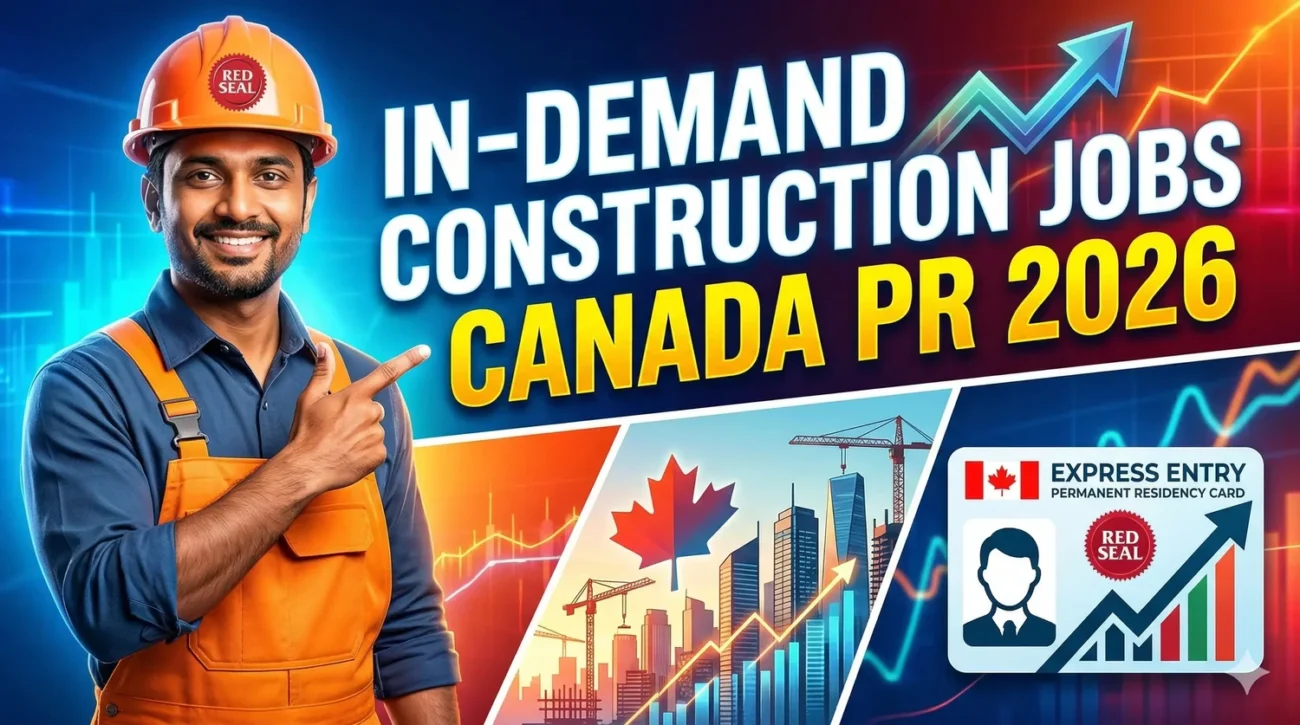
Canada’s construction industry is facing a major labor shortage, creating thousands of opportunities for foreign workers seeking high-paying jobs with visa sponsorship. Skilled tradespeople, heavy equipment operators, welders, electricians, plumbers, and construction managers are among the most in-demand workers across provinces such as Alberta, Ontario, British Columbia, Saskatchewan, and Nova Scotia.
For international workers, construction jobs in Canada can lead not only to stable employment and competitive salaries but also to permanent residence (PR) through immigration programs like Express Entry, Rural Community Immigration Pilot (RCIP), Provincial Nominee Programs (PNPs), and the Atlantic Immigration Program (AIP).
This guide explains everything foreign workers need to know about:
- Visa-sponsored construction jobs
- Employer-sponsored work permits
- LMIA jobs in Canada
- Permanent residence pathways
- Recruitment agencies
- Construction companies hiring foreigners
- Salary expectations
- Visa application process
- Embassy verification
- Immigration mistakes to avoid
Why Canada Needs Foreign Construction Workers
Canada is investing billions of dollars into:
- Infrastructure development
- Residential housing projects
- Commercial construction
- Transportation systems
- Renewable energy projects
As a result, employers are actively hiring international workers through employer-sponsored work permits and immigration programs. Many employers support Labour Market Impact Assessment (LMIA)-based hiring to legally recruit foreign workers. (Canada)
Industries connected to this topic include:
- Immigration law firms
- Work visa consultants
- Relocation services
- International recruitment agencies
- Settlement agencies
- Overseas employment companies
Top High-Paying Construction Jobs in Canada With Visa Sponsorship
1. Construction Project Manager
| Details | Information |
|---|---|
| Average Salary | CAD $85,000 – $145,000/year |
| Visa Sponsorship | Yes |
| PR Eligible | Yes |
| Demand Level | Very High |
Responsibilities include supervising large construction projects, managing teams, budgeting, and ensuring compliance with safety regulations.
2. Electrician
| Details | Information |
|---|---|
| Average Salary | CAD $70,000 – $110,000/year |
| Visa Sponsorship | Yes |
| PR Eligible | Yes |
| Trade Certification | Usually Required |
Electricians are highly sought after across Canada, especially in industrial and commercial construction.
3. Welder
| Details | Information |
|---|---|
| Average Salary | CAD $60,000 – $100,000/year |
| Visa Sponsorship | Yes |
| PR Eligible | Yes |
Pipeline, structural, and industrial welders are among the fastest-growing skilled trades.
4. Heavy Equipment Operator
| Details | Information |
|---|---|
| Average Salary | CAD $65,000 – $120,000/year |
| Visa Sponsorship | Yes |
| PR Eligible | Yes |
Operators of cranes, excavators, bulldozers, and loaders are in strong demand.
5. Carpenter
| Details | Information |
|---|---|
| Average Salary | CAD $55,000 – $95,000/year |
| Visa Sponsorship | Yes |
| PR Eligible | Yes |
Residential housing shortages have increased the demand for carpenters nationwide.
6. Plumber
| Details | Information |
|---|---|
| Average Salary | CAD $70,000 – $115,000/year |
| Visa Sponsorship | Yes |
| PR Eligible | Yes |
Licensed plumbers are among the best-paid tradespeople in Canada.
Types of Work Visas for Construction Workers in Canada
1. Employer-Specific Work Permit
The most common visa for foreign construction workers. This permit allows you to work only for the sponsoring employer listed on the permit. (Canada)
Requirements
- Valid job offer
- LMIA approval (in many cases)
- Employment contract
- Proof of qualifications
- Passport
- Medical examination
Official website: IRCC Work Permit Information
2. Temporary Foreign Worker Program (TFWP)
Employers use this program to hire international workers when no Canadian workers are available.
Benefits
- Legal work authorization
- Potential PR pathway
- Family sponsorship options
3. Provincial Nominee Program (PNP)
Many provinces prioritize skilled construction workers through employer-driven immigration streams.
Popular provinces include:
- Alberta
- Saskatchewan
- Manitoba
- Ontario
- British Columbia
4. Atlantic Immigration Program (AIP)
Construction workers can receive employer sponsorship in Atlantic provinces including:
- Nova Scotia
- New Brunswick
- Prince Edward Island
- Newfoundland and Labrador
(Canada)
Official website:
Atlantic Immigration Program
5. Express Entry
Express Entry is Canada’s main skilled immigration pathway.
Construction occupations under skilled trades often qualify through:
- Federal Skilled Trades Program
- Canadian Experience Class
- Federal Skilled Worker Program
Benefits
- Faster PR processing
- Higher CRS points for Canadian work experience
- Family sponsorship opportunities
Official website:
Express Entry Canada
6. Rural Community Immigration Pilot (RCIP)
Rural Community Immigration Pilot (RCIP) helps employers in smaller Canadian communities hire foreign workers.
Construction jobs are heavily targeted in rural areas experiencing labor shortages. RCIP may also offer LMIA-exempt work permits. (Canada)
Official website:
RCIP Program Information
Visa Requirements for Employment in Canada
Foreign workers generally require:
| Required Documents | Purpose |
|---|---|
| Valid Passport | Identity verification |
| Job Offer Letter | Employer sponsorship proof |
| LMIA (if applicable) | Labor approval |
| Educational Certificates | Qualification proof |
| Trade Certification | Skilled trade licensing |
| Work Experience Letters | Employment history |
| Police Clearance | Security check |
| Medical Examination | Health verification |
| IELTS/CELPIP Results | Language requirement |
| Proof of Funds | Financial support |
(IRCC Canada)
Steps to Get Construction Job Visa Sponsorship
Step 1: Prepare Canadian-Style Resume
Your resume should include:
- Trade skills
- Certifications
- Work history
- Safety training
- Machinery experience
Step 2: Search for LMIA-Approved Employers
Useful websites:
- Canada Job Bank
- Indeed Canada
- Workopolis Canada
- Government of Canada Jobs
Step 3: Attend Online Interviews
Employers often conduct:
- Zoom interviews
- Skills assessments
- Trade verification
Step 4: Employer Applies for LMIA
Most employers must obtain a Labour Market Impact Assessment (LMIA). (Canada)
Step 5: Apply for Work Permit
Apply online through IRCC.
Official portal:
IRCC Online Application Portal
International Recruitment Agencies Hiring Construction Workers
Hays Recruitment Canada
Address:
1 Adelaide Street East, Suite 2100, Toronto, Ontario, Canada
Website:
Hays Canada
Services:
- Skilled trades recruitment
- Construction staffing
- Employer sponsorship opportunities
Drake International
Address:
Suite 400, 255 Consumers Road, Toronto, Ontario, Canada
Website:
Drake International Canada
Services:
- Skilled labor recruitment
- Temporary foreign worker placements
- Industrial staffing
Work Global Canada Inc.
Address:
Vancouver, British Columbia, Canada
Website:
Work Global Canada
Services:
- Immigration recruitment
- LMIA support
- Skilled trade placements
Construction Companies Offering Visa Sponsored Jobs
PCL Construction
Head Office:
Edmonton, Alberta, Canada
Website:
PCL Construction
Common Roles
- Welders
- Carpenters
- Heavy equipment operators
- Construction laborers
EllisDon
Address:
89 Queensway West, Mississauga, Ontario, Canada
Website:
EllisDon Careers
Hiring Areas
- Civil construction
- Project management
- Skilled trades
Aecon Group Inc.
Address:
20 Carlson Court, Suite 800, Toronto, Ontario, Canada
Website:
Aecon Careers
Visa Sponsorship Roles
- Industrial electricians
- Welders
- Pipefitters
- Crane operators
Bird Construction
Address:
5700 Explorer Drive, Mississauga, Ontario, Canada
Website:
Bird Construction Careers
PR Pathways for Construction Workers
1. Express Entry Skilled Trades
Construction workers with Canadian work experience can qualify for PR through skilled trades categories.
Eligible Trades
- Electricians
- Welders
- Plumbers
- Carpenters
- Heavy-duty mechanics
2. Provincial Nominee Programs (PNP)
Provinces nominate workers with labor shortages.
Popular Construction-Friendly PNPs
- Alberta Advantage Immigration Program
- Ontario Immigrant Nominee Program
- Saskatchewan Immigrant Nominee Program
3. RCIP – Rural Community Immigration Pilot
Rural employers can sponsor workers directly for PR. (Rural Community Immigration Pilot (RCIP))
4. Atlantic Immigration Program
Atlantic employers can sponsor foreign workers for permanent residence.
Settlement Benefits for Foreign Workers
Canada offers strong settlement support including:
- Public healthcare
- Free education for children
- Family sponsorship
- Worker protection laws
- Pathway to citizenship
- Multicultural communities
Common Immigration Mistakes to Avoid
1. Using Fake Job Offers
Only apply through verified employers and official government portals.
2. Submitting Incorrect Documents
Ensure:
- Passport validity
- Accurate employment history
- Correct translations
3. Ignoring LMIA Requirements
Many construction jobs require LMIA approval before work permit applications.
4. Falling for Immigration Scams
Avoid:
- Fake recruiters
- Unlicensed consultants
- Upfront job guarantee scams
Use authorized immigration representatives only.
Embassy Contacts and Work Visa Verification
High Commission of Canada in Pakistan
Address:
Diplomatic Enclave, Sector G-5, Islamabad, Pakistan
Website:
Canada High Commission Pakistan
How to Verify a Canadian Job Offer
You can verify employers through:
- IRCC employer compliance records
- Canadian business registration
- Provincial licensing databases
- LMIA verification
Official resources:
- IRCC Official Website
- Job Bank Canada
Meeting Eligibility Requirements
To maximize approval chances:
| Eligibility Factor | Recommended Standard |
|---|---|
| Work Experience | 2–5 years |
| Language Score | IELTS CLB 5–7 |
| Education | High school/trade diploma |
| Trade Certification | Preferred |
| Medical Fitness | Required |
| Criminal Record | Clean |
Frequently Asked Questions
1. Can foreigners get construction jobs in Canada with visa sponsorship?
Yes. Many Canadian construction companies hire foreign workers through employer-sponsored work permits and LMIA-based recruitment programs due to ongoing labor shortages in skilled trades and infrastructure projects.
Popular sponsored roles include:
- Welders
- Electricians
- Carpenters
- Plumbers
- Heavy equipment operators
- Construction laborers
- Project managers
Official immigration information:
IRCC Work in Canada
2. What is the average salary for construction workers in Canada?
Construction salaries in Canada vary by province, experience, and trade specialization.
| Job Role | Average Annual Salary |
|---|---|
| Construction Laborer | CAD $45,000 – $65,000 |
| Welder | CAD $60,000 – $100,000 |
| Electrician | CAD $70,000 – $110,000 |
| Plumber | CAD $70,000 – $115,000 |
| Heavy Equipment Operator | CAD $65,000 – $120,000 |
| Construction Project Manager | CAD $85,000 – $145,000 |
Remote mining and oilfield construction projects may pay even higher wages.
3. Do Canadian construction jobs require an LMIA?
Many employer-sponsored construction jobs require a Labour Market Impact Assessment (LMIA). An LMIA proves that no Canadian citizen or permanent resident is available to fill the position.
Some immigration programs and pilot pathways may offer LMIA exemptions.
Official LMIA information:
Temporary Foreign Worker Program (LMIA)
4. Which provinces in Canada have the highest demand for construction workers?
The provinces with the strongest demand include:
- Alberta
- Ontario
- British Columbia
- Saskatchewan
- Manitoba
- Nova Scotia
These regions are actively recruiting foreign workers for housing, commercial, transportation, and energy projects.
5. Can construction jobs in Canada lead to permanent residence (PR)?
Yes. Construction workers can qualify for permanent residence through several immigration pathways including:
- Express Entry
- Provincial Nominee Program (PNP)
- Atlantic Immigration Program (AIP)
- Rural Community Immigration Pilot (RCIP)
Official PR pathways:
Express Entry Canada
6. What documents are required for a Canada construction work visa?
Typical required documents include:
- Valid passport
- Job offer letter
- LMIA approval (if required)
- Educational certificates
- Trade licenses/certifications
- Work experience letters
- Police clearance certificate
- Medical examination report
- IELTS or language test results
- Proof of funds
Requirements may vary depending on the visa category and province.
7. Is IELTS required for construction jobs in Canada?
In many immigration pathways, language testing such as IELTS General Training or CELPIP is required. However, some temporary employer-sponsored work permits may not require high language scores.
For PR programs, language requirements are usually mandatory.
Official language requirements:
IRCC Language Requirements
8. How can I find legitimate visa-sponsored construction jobs in Canada?
You can search through:
- Canadian Job Bank
- Licensed recruitment agencies
- Employer career portals
- Provincial immigration programs
Trusted job websites:
- Canada Job Bank
- Indeed Canada
- Workopolis Canada
Avoid fake recruiters requesting illegal upfront payments.
9. Can my family move with me to Canada on a work visa?
In many cases, yes. Eligible foreign workers may bring:
- Spouse/common-law partner
- Dependent children
Spouses may qualify for an open work permit, while children can attend Canadian public schools.
Official family immigration information:
Bring Your Family to Canada
10. How long does it take to process a Canadian work visa?
Processing times vary depending on:
- Country of residence
- Visa category
- LMIA status
- Biometrics
- Medical checks
Average processing can range from:
- 4 weeks to 6 months
Official visa processing tool:
IRCC Processing Times
Final Thoughts
High-paying construction jobs in Canada with visa sponsorship remain one of the best opportunities for skilled foreign workers seeking stable employment and permanent residence.
Canada urgently needs:
- Welders
- Electricians
- Carpenters
- Equipment operators
- Construction managers
Through programs such as Express Entry, Rural Community Immigration Pilot (RCIP), Provincial Nominee Programs, and the Atlantic Immigration Program, international workers can legally immigrate, work, and eventually obtain permanent residence in Canada.
Always use official immigration websites, licensed consultants, and verified employers when applying for work permits and visa sponsorship opportunities.
